Rebellion and Resilience in the Life of Hana Berger Moran

 Apple Podcasts
 Spotify
 YouTube
 Amazon Music
 PocketCasts
 Podchaser
 TuneIn
 iHeartRadio
 Pandora
 Deezer
 Overcast
 Castbox
 PlayerFM
 Podcast Addict
 RSS Feed
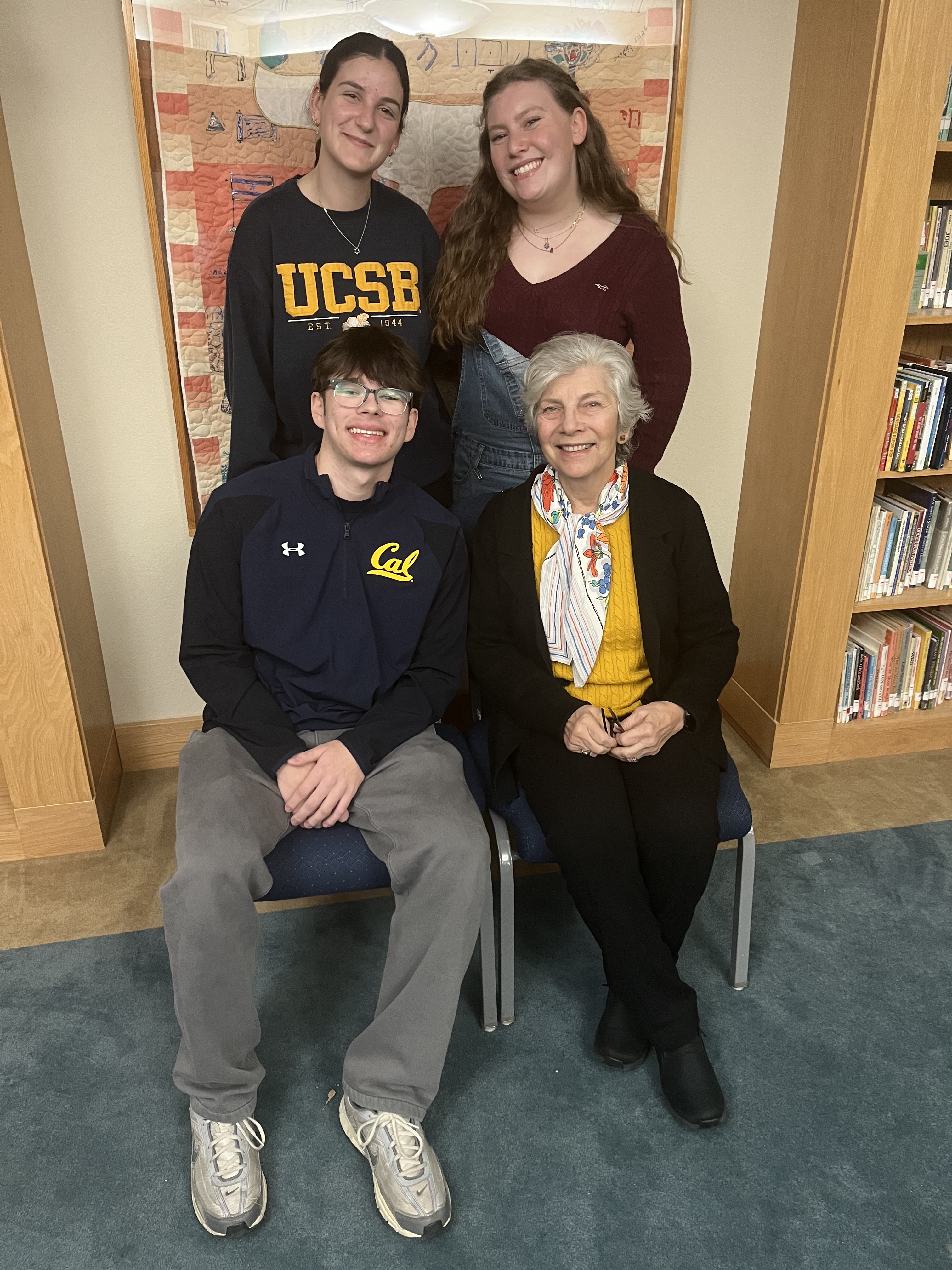
 In this episode, we sit down with Hana Berger Moran, a Holocaust survivor, chemist, and beloved member of the Better Together community. Born in a Nazi concentration camp in 1945 and saved through a series of extraordinary acts of courage and luck, Hana shares her mother’s bravery, her own journey from survival to a scientific career, and her lifelong commitment to giving back. We discuss Jewish identity today, facing antisemitism in high school, the power of education and great teachers, and the guiding lesson of Hana’s favorite saying, “If I am not for myself, who will be?”
Thank you to our funders: Sinai & Synapses, Contra Costa Jewish Community Center, an anonymous prominent national foundation, and the wider Midrasha community for making this show possible.
If you want to donate so we can make more episodes or have questions for our team, email shalom@binapod.com or visit binapod.com.
Hana: [00:00:00] And mother came out holding me. She says, okay, these are Americans. It's okay. The war is almost over. Several hours later, there is a soldier with a Red Cross on, on his helmet coming by, and my mother, who was fluent in English says to him, I have something to show you.
Yarden: This is Bina, a Better Together podcast from the students and faculty of Contra Costa Midrasha, where Jewish students, mentors, and elders sit down to share stories and trade wisdom.
I'm Yarden Crane. Today I'm co-hosting with Fellow Better Together teens, Zachary Robinson and Aviva Feder. Today, we're talking with Hana Berger Moran. Hana is a Holocaust survivor, a chemist, and a treasure to our community. We think you'll be inspired to hear your story, not just of surviving, but thriving.
Before we dive in, we wanna share a quick note to [00:01:00] keep this conversation as honest as possible, we've left the interview intact, which includes some swearing. If you or someone listening with you may be sensitive to that, please be aware. It's short but relevant to the conversation, but we wanted to let you know.
Hana, do you wanna introduce yourself and say two things that you think are important to you?
Hana: Well, first of all, I am honored to be here with you and to talk about my late mother and late father and rest of my family. It is always important to remember what people can do to each other and not to take it lightly because, uh.
That's the way it is. It makes from totally normal people, uh, and monsters. And so it's, it's important that we remember that. And above all so, you know, I am honored to be here [00:02:00] talking about my family because it's important for us to remember. It's so easy to slide and do that situation. So thank you.
Yarden: You've been at Better Together for a very long while. Now more than both of us. What brought you to Better Together? What inspired you to come and join this program?
Hana: I think the name Better Together. I think what can be wrong? It definitely is, is very much encouraging. And second, for me to be with young people, it makes me feel young.
So it is a gift for me. It's a gift first of all to belong to this congregation. And second to have make you all and to be [00:03:00] meeting with you and feeling like we are family.
Yarden: Zach, do you wanna introduce yourself?
Zach: My name is Zach Robinson, and my family has a long legacy here at B’nai Tikvah.
Yarden: You can say two things that are important to you.
Zach: Two things that are important to me are, like what you said, we carry on people's legacy and we never forget, and I feel like that's really important just so we can never forget and not repeat the same mistakes that we've already made previously. And another thing that is really important to me is to not procrastinate because falling behind is a really hard thing to recover from.
Yarden: Would you say you're a big procrastinator?
Zach: Very. I'm a very big procrastinator.
Yarden: Are you a big procrastinator too?
Hana: Medium procrastinator, but pro nevertheless. Yeah. Now a little bit less of being a procrastinator because probably when I look at this woman with this gray hair and and wrinkles, I said, you don't have much time to procrastinate.
[00:04:00] So I talk to her.
Yarden: Do you think that you procrastinated more now than you did when you were younger?
Hana: The other way around? Mm-hmm. When I was younger, I procrastinated more because it was. I had the reasons, you know, well, maybe I will wait. I will not do it right now. And dumb, dumb, dumb.
Yarden: Would you say you were like a rebellious kid?
Did you listen to your mother and what she said?
Hana: Well, uh, I was pretty rebellious and uh, and my mom on one hand was pretty upset about it. And on the other. I think she was glad that I had the guts to be rebellious, so it was almost like, yeah, good. She's got. She's got it. And, uh, especially considering where I started.
So it was, it was important [00:05:00] to her that I have a little bit of a chutzpah and a little bit of guts. And it doesn't mean that she liked it often, but having said that, she, uh, she respected that.
Yarden: I think maybe some of it goes back to when your mom, your mom could be seen as a rebel in the Holocaust.
Hana: Right.
Yarden: Do you wanna talk a little bit about that? Right.
Hana: She was, she, she was incredible and, uh, and had courage. And she was, she was a, a rebel. And because there was moments when she did rebel, especially when she got, uh, with me to Mauthausen and they were trying to take me away from her. And I was just few weeks old and, and she.
Created a pretty, pretty big hullabaloo and and that was helpful. That was helpful because one of the guards came by, a woman guard came by and, and [00:06:00] she then helped my mother to stay alive, basically, both of us, to stay alive. That was already at the second camp at Mauthausen.
Yarden: I would say that's probably a very good.
I don't know. I think if she didn't speak up and she didn't like stick to her mind, then I don't,
Hana: She was, she was incredible and I always admired that. Um, and I told her the, the fact that you were who you were, you saved both of us. And, uh, and she, she just smiled. She said, well, I'm glad I did. And now go and do your homework.
Yarden: Do you wanna talk a little bit more about your mom's story?
Hana: Mom was pregnant when she was taken to the camp and, uh, Mangele, um, this was in Auschwitz. She stayed standing there naked with all the other women. Uh, and Mangele is walking by and looks at [00:07:00] her. And my mother spoke fluent German and he, he says to her, “Bist du schwanger? Fresche Frau? - A good looking woman. Are you pregnant?” And my mother says, “Nein - No.” He looks her up and down, smiles and keeps on going, thank God. And then she got close and what she got was kind of a mom said kind of a brown coat dress, which was a gift because it was big. And should she have eaten? Well, she could have put on weight, but she didn't have anything to eat anyway.
And so, um, she started to work in a factory and, and they were taken from Auschwitz to [00:08:00] Freiberg, which was a little camp near Dresden. In Germany and in Freiberg there was a factory, which was very funny. My, my mother said that was manufacturing airplanes. And then my mother said to me, apropo, not one plane ever flew out of there.
And her job was to, uh, put together the wings of an airplane. So she was standing 12 hours a day. They had very little to eat. Um. But she said, I'll make it. I'll do it. And so she did. One day toward the end of her pregnancy, she was uncomfortable, so she was taking off that brown coat dress, and I guess the belly got a little bit bigger.
And this is now already in the [00:09:00] camp, in the barrack, one of the women, uh, who was a prisoner as well, started screaming like crazy, “you pregnant? You gonna get us killed? You're gonna get us killed. You're pregnant!” And the guards came running in, the women guards like crazy, and she says, “vas ist gachein - what's going on?”
And my mother said, and, and then that other woman said, “she's pregnant.” They look at my mother and said, “truly, bist du schwanger, are you, are you pregnant?” And my mother says, “yes.” “Okay,” they said, “what do you need?” This is what they said. What do you need? Now let's, let's think a little bit. The Russians are coming from the East, the Americans are coming from the West.
This is now March. 45, the end of March of 45. Okay, [00:10:00] so Bill, talking about self servant, you know, and, uh, and they brought food to my mother. And, and, uh, two days later, yours truly arrived in the basement of the factory. And as I as mother was giving birth, she said it was like a theater. The guards were there and some prisoners were there and they were all saying, “Is it gonna be a boy or is it gonna be a girl?”
They were taking bets. And yours truly comes out and I was like, this coming out. One of the women starts screaming, “Devil was born. Yeah, devil was born.” And my late mother used to tell me when I was being a teenager, I was told that the devil.[00:11:00]
Anyway, so this was 12th of April 45 and they took, my mother, took her to a, to a place where, which was for, uh, for sick people. And the next day she was put on a, on a train together with the other women because they were running away trying to get them all killed somewhere. They took us at that, that, uh, train ride took about two weeks from Germany through Czechoslovakia.
They stopped in one of the little village where they were giving food. Because the train tracks in front of them were destroyed, so they had to be moved to another, another, uh, train. And from there continued two days later. In the meantime, the [00:12:00] villagers fed them and fed the Germans as well because nobody was eating.
And, uh, they continued and they came to Mauthausen. Which was a big camp, death camp in Austria. And, uh, when my mother was, uh, holding me, I didn't have much clothes on yet. And, uh, well, no, by then I had clothes because the people in Horniebschiezen brought some clothes to, to my mother for me, and my mom said, oh, it was so great.
I could. Try this on you and that on you. Yeah. Well, I was one and a half kilo. Okay. So I wasn't all that big to start with. And when my mother came together with the other [00:13:00] prisoners to the gates of Mauthausen, the guard said, “oh, child, no, no, no, no, no.” Trying to take it. My mother was screaming her head off. Hold me as hard as she could.
The guards were trying to pull me away and luck again, luck. One after the other. A woman guard was walking by and she says, “stop.” She says, and my mother spoke fluent German, so she understood what was being said. She says, “I haven't seen a child seven years. I wanna play.” My mother let her play with me, and then the woman said, “just follow me.”
She went to her barrack, she played with me. Then she turned around, gave me back to my mother and said, “don't go to the main camp. Go down there.” There were three buildings, [00:14:00] barracks that were empty because the Polish and Gypsy prisoners were killed the day before. They were gassed the day before, and so they were empty and my mother went there.
There was no food, there was no drink, there was nothing, but there was a building and so my mother was there with me when? On the 5th of May, so this is now 28th of April. 29th of April, 30th of April. And on 5th of May, my mother hears an American song, which she knew, “Roll Out the Barrels.” And the car going up and another car going up the road.
Because Mauthausen is on top of the hill. You go up from Linz. And Mother came [00:15:00] out holding me. She says, okay, these are Americans. It's okay. The war is almost over. The war was over because it was 5th of May. Several hours later, there is a soldier with a Red Cross on, on his helmet coming by, and my mother, who was fluent in English says to him, “I have something to show you.”
He looked up and then apparently my mother said to him, "Isn't she beautiful?” No. I met this man because I looked him up, but since he lived in Illinois, near Chicago where I lived, and he said, “Hana, I cannot tell you in any of any words how horrible you looked, but when your mother said, isn't she beautiful? So I just, I just nodded.”
Anyway, so he took, he [00:16:00] told her. I have to bring my doctor because he was a nurse at that time, and he brought his doctor, and the doctor said, Dr. Harold Tracy. He says, “I have to take care of the baby.” Because I had furunculosis the the on the whole body, uh, filled with puss, and uh. And so they took me and, uh, the, the next day and a woman nurse came back with me.
My mother was staying in those barracks and, and she was crying and my mother said, “is she dead?” “No, no, no. She's just very tired. She's just very tired.” And that was it. And she brought me to my mother. In the meantime, as. Petersohn, Mr. Leroy Petersohn, whom I found met, and I called him Daddy Pete, and I [00:17:00] am family with his family and this, uh, and, and my mother said, luckily they saved my life because they took care of all the, all the, uh, infection and, uh.
Then my mother got on the boat, went from Mauthausen to Bratislava on Danube, waited for my late father who didn't come back. She found her stuff on the, on the street from where they lived to the thrown out. Luckily, she found it. She found another apartment and then she decided she got help for, for me. A caretaker and she went back to school.
She went back to study to become a teacher of languages, and the rest is history. She was just, she was just incredible and never felt [00:18:00] sorry for herself and she was always, uh, very clear too how I'm supposed to behave, how I am supposed to study, how I am. She got just a little bit annoyed that I wanted to study chemistry.
It was like, Hmm. 'cause she was a teacher of languages, right? I said, mom, I already speak languages. I, I love chemistry. Okay. Okay. But, uh, we, um, I didn't bother her, you know, to talk about. The camp and and stuff, if she wanted to talk about it. And she didn't. She wasn't interested. She just said, “we are here.”
That was her favorite saying, we are here. And that was it. Yeah. I wish my father would have survived. I wish he would have believed that she's gonna survive, but he didn't and he basically didn't want to live. [00:19:00] And, uh. That was it. She never, she never remarried and, uh, it was important to her to be teaching languages and she was a fantastic teacher.
She really was. She was my teacher too. And let me tell you, it wasn’t fun. But, uh, she was, she was incredible.
Yarden: How did you find Pete?
Hana: Oh, I actually, I knew it was 11th Armored Division. So I got, I got in touch with them and I asked, and they said, oh, first they gave me a different person and they said, no, no, it's not me, it's Leroy Petersohn.
You want him. And I, I found out his phone number and where he lived 40 kilometers from Chicago to the west and yeah. [00:20:00] I called and I said, may I come and visit? And he just kept saying, “I don't believe it. I don't believe it, I don't believe it.” So I have photographs with them. And then we went to some happenings together, you know, celebrations of, of, uh, liberation and his family as well.
And, uh, and we were interviewed by CBS with her, his son. And there will be a program CBS, which will be, which will be sometime. I will let you know when, so I will let you know when they are. They're working on it right now. Leslie Stahl. She came to interview us in Mauthausen, so we met and we talked.
Yarden: It's amazing.
Hana: No, but Daddy Pete was amazing. I called him Daddy Pete. That was it. Leroy Petersohn. Daddy Pete. He just kept looking [00:21:00] at me. He said, “I can't believe it. You are alive. I can't believe it.” I said to him, “Daddy, Pete, I'm stubborn.” That helped.
Yarden: Well, stubborn is one of the best and worst qualities.
Hana: Yeah, that's right.
Yarden: But I think it really helped you, I would say
Zach: So a big theme we're talking about today is some wisdom to your younger self or just your teenage self because. There's like a lot of stuff that we probably would wanna tell our teenage self. So is there any wisdom or advice you would wanna tell yourself when you were a teenager
Yarden: or tell us
Zach: Oh yeah.
Yarden: As teenagers right now?
Hana: Well, I'll tell you what. Know what you want to do and work toward that. Study. Don't be lazy. Seriously. It's very important because nobody is gonna give it to you. And you have to make it for yourself to study, [00:22:00] to learn. And at the same time, remember to have fun. So on both sides, don't, don't be shy, don't be shy.
And second thing, don't be shy asking questions. Asking questions of the teachers, and if not teachers, then of friends, and if not friends. You have plenty of older people here in in the in, so, and I will be very happy to help with whatever I can because my favorite saying in Hebrew is "Im ein ani li, mi li"
(אם אין אני לי, מי לי).
It means, “If I am not for myself who will be?” It was one of the first things I learned when I came to Israel. When I started to learn Hebrew. It was like. If you are not for yourself, who will be? So remember that that's not selfish. That's a survival. [00:23:00] And there is nothing wrong with being for yourself, okay? And if somebody is starting to look at you, kind of like, hmm, you just smile and walk away.
That's it. Just smile and walk away. There's nobody has given anybody any prize for suffering. Okay. Or putting yourself down, G-d forbid. No. You have to know who you are, what is your worth, and don't be shy.
Yarden: I like that. Did you take that into your career as a chemist?
Hana: Yeah. Well that was a very funny story.
My late mom. I fell in love with chemistry in the eighth grade. The first time we had chemistry, and I loved the teacher. She was this tiny little thing, but boy, she was good. And I am starting the high [00:24:00] school and my mother says, okay, start thinking about what you want to study. I said, I know. Okay. What? I said, chemistry.
My mother, who was a linguist and a teacher in high school, she gives me this look. I said, no, no, no, no. I said, yes, yes, yes, yes, yes. Hana. Why chemistry? I said, because I can make good stuff. I can give back. I can make medications. I wanna give back. And with learning English, I can still learn English. I can learn another language.
It's okay. Well, you will change your mind.
I just smiled. She says, well, we'll see. Well, I didn't change my mind and uh, I was the best, uh, best decision I ever made. Uh, [00:25:00] one of the best decisions I made. And, um. I loved it and I had a, I had wonderful teachers and uh, and then went on and studied chemi, uh, uh, technical university chemistry to be a chemical engineer.
Oy, that was, that wasn't simple, but I loved it and the rest is history.
And whenever I was able to synthesize something that would be helpful, you know, when I was working. Uh, uh, for me it was always, I'm giving back. I'm giving back. I owe it, I owe it. I I'm giving back. It was very important to me for every medical product that I managed to make and whether it was going to be used or not, will it?
That was their decision. I was, uh, I said to [00:26:00] myself, I talked to. The doula. I'm giving back. I'm giving back 'cause it was important to me.
Zach: So going back to like what you said about teachers, we were talking about it during one of our Better Together sessions, that what sparked your growth in chemistry was that you had a great teacher.
Hana: I, she, she was in incredible, she was this tiny person and, uh, it was in eighth grade when we had chemistry for the first time. And, uh. It was obvious that she loved it. She herself loved chemistry. And once you get a feeling for that from the teacher, you say, yeah, I understand.
And she was really an incredible teacher and I was very lucky subsequently in the ninth grade.I had this Jewish guy who was a chemistry teacher. Boy, he was [00:27:00] useless, but, but because he was Jewish, I was behaving. I decided that I will behave and I, I had a couple of talks with him because he was ninth and 10th grade, so for two years. And, but uh, yeah, it was important to me to give back. Very important.
Zach: Yeah, I feel like giving back is really important part of like everyone's life. It gives you like meaning in life. And I like to give back by going to like food banks and stuff like that. During my summer, I was bored, so I just went to a food bank and I took all my friends with me 'cause he ran a red light and he got a ticket.
So we just spent our community service hours.
Hana: That's wonderful. Uh,
Zach: doing the food bank, but I just did it for fun too. And then, um. Just stuff like that, but you give back by sharing your passion with chemistry. But giving back could just mean so many different things in different ways.
Hana: Yeah. I mean, giving back, just being kind, [00:28:00] it's wonderful.
And not turning your nose at everybody because they don't look like you or they are shorter, like. To value life is giving back, you know? And not to comparing yourself to others. That's it.
Zach: Hmm.
Hana: Because we are, we are all here, and let's just try to live as peacefully as possible. The life is hard as it is.
Thank you very much.
Yarden: Do you think that a lot of your giving back, like your attitude towards giving back was because you were the daughter of a Holocaust survivor?
Hana: I think it had, it was not so much that I was a daughter of Holocaust survivor. It was that I was a Holocaust survivor and I felt almost like, yeah, give back.
I am here thanks to her or him, whatever we make them to be. And uh, [00:29:00] and it was important to pay back. Very important. And, and to value, you know, to value what I was given. I just a mere fact that I have two arms and two legs and one head. And it's still, you know, wor it's working. It was important. And my mom was, was always reminding me, remember, this was not simple.
You are here. Appreciate. My father didn't survive. He was, uh, he, he was killed in, uh, January 45. That was hurtful to me. And of course my grandparents, they already were killed in 42, 1942 in Auschwitz. And so, um, I felt that I owe, you know, just a mere [00:30:00] fact that I am walking on this earth that it's to give back.
Yarden: I'm with you. I think this past weekend with, um, our Contra Costa Midrasha, we went to LA for, um, like a retreat that we normally do, and we visited the Museum of Tolerance,
Hana: right?
Yarden: I don't know if you've ever been there. No,
Hana: I've never been there.
Yarden: But it like, takes you through almost like a simulation.
Hana: Wow.
Yarden: Um, where you. Get to experience what it was like and see the pictures of what it was like through the Holocaust. And it's just like that, you feel that firsthand experience and you feel the, the pain and the fear and the, and I just feel like after seeing that and after hearing all these stories and just keep on going through it, I just, I feel some of that guilt, I may not be.
A Holocaust survivor myself, but I feel so grateful to be alive because the goal was to get rid of all [00:31:00] Jews, but we're still here and we're still going and surviving and succeeding and
Hana: Right.
Yarden: I think I always feel that of like life's too short to keep on complaining and That's right. Keep on getting in your head like it's, we were given this chance to survive and to grow.
Hana: Exactly. And that's how I felt all my life. And my son, I basically made him understand that and luckily he, he knows and he is, uh, he's very much conscious of it. It was, and my grandchildren too, you know, it's like my son tells them, you know, your Safta is so and so, so it's not that you have to bow all the time as she walks in the room, but understand that she is, uh, she's, she taught me to appreciate life and I'm teaching you to do the same.
Having said that, [00:32:00] it's not simple. You still have to study, work, and understand what you owe.
Yarden: Yeah, I think Zach and I are both at a time in our lives where seniors in high school and moving on to college or whatever we're doing, and it's just like we're at that point where it's like that next step in life.
Hana: Yeah. But having said that, you remember you, you appreciate yourself. Okay. Don't put yourself down.
There's the life out there. It's tough enough, but, uh, but remember. That you appreciate what you have and that evaluate what you want to do. Don't be shy. Just say, I really wanna do this, and, and that's it. And feel if you feel at peace with that decision, [00:33:00] that's what's important. That's what's important.
Nobody else is gonna do that for you. That's the bottom line and those Hebrew words, “Im Eyn Ani Lee, Mee Lee - if I am not for myself, who will be?” It's so true, and that doesn't mean that you are selfish. To the contrary, it means that you truly appreciate yourselves and that's it.
Yarden: How do you stay connected to your Jewishness?
I especially in the face of a lot of antisemitism in that school.
Zach: Um, I did a hate crime like almost every day at my school. Like during, uh, Rosh, like during Rosh Hashanah, I was just walking to my car. Some dude rolled down the window while he was like driving past me. He goes, I'm sorry for my language, but, “fuck you kike.”
And so that kind of really hurt me, but. Um, and the, when I get mad over [00:34:00] it or I get angry over it, some people just tell me that I'm soft or. Just stuff like that. And everyone knows that I'm Jewish somehow, even though I, like, sometimes I try to hide it, which I know is terrible. And so now I just embrace it.
And so like going back to what you said, um, my great-grandfather and both of my great-grandparents were in the Holocaust, and my great-grandfather survived because he was a barber and the Nazis liked how he cut hair so much, that he cut hair for the Nazis. Right. And so, um,
Hana: survival.
Zach: Yeah, exactly. Yeah. So, um, when they, they were both in Greece and when they immigrated to the US they were forced to change their last name.
So my middle name, Najari is, uh, their last name that they were forced to change originally. So I feel like I love just carrying on that like, sense of my Jewishness and just my sense of survival and all that. Yeah. They went through, through myself and like, I'm going off on a tangent, but like, um, when people, when people talk like.[00:35:00]
There's this huge question like, would you, if you, like you can have dinner or meet any celebrity, dead or alive, who would you meet? And my answer is always my great-grandfather. And I get like, 'cause I was unfortunately unable to meet him. And so, um, but every story I hear about him is great. And also I notice that like every single Holocaust survivor is the nicest and most kind person in the world.
Like literally, even though they have no reason to be, but. They're the nicest, most kind, especially you, you are the nicest person of all time. And so, um, so yeah, I just say my great-grandfather,
Hana: I can be a real bitch.
Zach: Everyone take
Hana: no, but I am, I am, I am blessed to be here. I really am blessed to met you all and to be here and trust me if somebody was, was being impossible when I was working, I, I didn't get into fights with them.
I just said, ah. Nevermind. I just walked away and that got them even more pissed [00:36:00] off, which was just fine.
Zach: And I love you so much. I wrote one of my college essays about you. Okay. Yeah. I wrote like my, one of my main college essays about you and I mentioned you in one of my college essays, so
Hana: Oh
Zach: yeah.
Hana: Heck
Zach: yeah.
Hana: Oh, thank you. Yeah. Oh, you want me to live with me now because I'll be walking his off with my notes.
Zach: Really? No, you just teach me so much. Just like from being kind when you have like the no reason to be just so kind and. So awesome because you, you
Hana: are wonderful people, I mean why not?
Yarden: But it's like you don't have this, I feel like everyone can be a meanie pants and everyone can be a like, like, especially you guys, you guys have this like, excuse, I would say like it's.
You don't have to be nice. You don't have to. You have hate that you can have hate in your heart. And I feel like with you, like I don't see any hate at all. Like I just see so much like sunshine and [00:37:00] just like kindness, like that's, you have a soul of kindness.
Hana: Thank you. Oh my goodness. Thank you. Thank you so much.
Yarden: Yes. No, I also wrote some of my college essay.
Hana: Jeez. No, my mom. My mom was so, so wonderful. And then last 10 years, she, she just stopped living. She was just sleeping. And, uh, but, uh, she was, she was an incredible teacher and adored by all her students, and, and she was tough. G-d. She
Zach: was a, do I feel like that's the definition of tough is your mother.
Hana: Yeah. She was tough. Yeah. But she was wonderful.
Yarden: She would be so proud of you for what you've done and everything that you strive to do and
Hana: No, I mean, oh
Yarden: Yes.
Hana: It was, it was, it was important to me to give back, very important to me to give back [00:38:00] because, um, like mom said, you know, silk. Didn't believe. So this is from, from the concentration camp about my mother.
Her information, you know, Lurenbein, Yarushka, and by the way, we had to change the last name because it was too Jewish. So she was told by, by, uh, one of the teachers who was her colleagues, um. Prishka, you have to change her last name. And uh, and she did from Lurenbein to Lomovar, because L’A-O-M-M-E would be a human being in France. Uh, and she was a teacher of French and English and German.
So she said, well, that will work. But just like in Mauthausen, where [00:39:00] I have my birth certificate from when she said, I want her to have the name Hana, H-A-N-N-A, because that's how it was spelled. Edith Lurenbeint it, lbe, and they said 9, 9, 9. It has to be Edith Hanna Lurenbein and it has to be the real German name. Edith. And so I have a birth certificate with Edith Hana Lurenbein, and then I have a Slovak birth certificate in sixties, which, which has just Hana Lomovar, so it was, you know, HANA, right?
Just, but it's very funny. It's like, yeah, I could be like schizo patient, all those problems. But, uh, my dad was a journalist and, uh, he was a beautiful, tall [00:40:00] man and mom was barely to his shoulder and, uh, they at least had some few years, good years together until they were loaded under, onto the train and taken first to a small Slovak camp.
And then the next day to Auschwitz and they were separated there. And, uh, one last time they spoke together across the fence and all my mom said, all my dad was telling her, Peri. Just think good thoughts. Just think good thoughts. Be careful and think good thoughts. Well, I wish he would've thought good thoughts.
Because mom learned later that he didn't believe that she will survive, that we will survive, and he stopped eating and so he became very [00:41:00] weak and the rest is history. But he was a, yeah.
Yarden: I feel like you take that with you. I think. Good thought.
Hana: right? Think good thoughts. And that's what, that's what she told me even when I was in, at, you know, when I was at home with her.
And she always said, remember your father said Think good thoughts. Think good thoughts. Yeah. And she was, she was incredible. Tough boy. She was such a tough teacher. But, uh, she was, uh, respected and loved. And, uh, she loved what she did and she was teaching languages and, and, uh, we learned a lot from her.
Zach: How many languages did your mother speak?
Hana: She spoke, uh, Slovakian, German, English, French, and of course, look [00:42:00] five.
Zach: Five, yes.
Yarden: And how many do you speak?
Hana: And she got pissed off that she didn't speak. Yeah, she didn't, she didn't speak Hebrew.
Zach: Oh my God.
Hana: So when Tommy and I came to visit her, and Tommy used to say, my son says Emma.
And my mother said, no English. You speak English.
Yarden: That's hilarious,
Hana: and Tommy didn't say anything, and I just looked at her and smiled. I said, mom, I can teach you Hebrew. I already speak enough languages.
Yarden: How many do you speak?
Hana: Well, I speak. And I speak Slovak and I speak Hebrew and I speak English and I speak Russian. Do you even, yeah, four or five. Depends on a good day. Five. On a bad day it's four.
Zach: How important do you think it is to learn a new [00:43:00] language because it's just millions, hundreds of millions at sometimes that you, more people that you could connect with when you learn a new language?
Hana: I think it's important. I really do. In our, my country, we had a saying that you are so many times a human being, how many languages you speak. But the bottom line is that it's a communication, you know, and it makes you available. And I, I love Russian. I did, I don't like the politics, mind you, but the language I loved, what was difficult for me was to learn German.
I really had a difficulty learning German and my mom said, it's a language, Hana, it's just a language. And besides, and then she said, you were born there, Germany. I said, well, that's why I am not crazy about it. But we got over it. Yeah, we got over it and of course I learned Hebrew and I went to Israel and that was, [00:44:00] uh, I loved that. I really did. You know, this is smiling whenever, even now, whenever I can, Julia, I can tell you that whenever I can say something in Hebrew.
No. That, that identity, that's what it is. Yeah. Because I came to Israel and, uh, with my, this father of my son, and then Tommy was born there a couple of months later. And, and the reason I left was the Russians invaded Czechoslovakia. And uh, and I will never forget that driving to work and, uh, picking up people from the bus stations 'cause there were no busses, you know, and then took them where they wanted, needed to go.
And in the afternoon I went straight to get the passport. Because I didn't have a passport and Tommy's father had a [00:45:00] passport because they already traveled. So I said I need to get a passport. So my passport photo is, I am still in my lab coat. Mm-hmm. But it was, uh. It was very important that I get it. My mom wasn't at home.
She was actually at the Kuort, in western Czechoslovakia, um, getting treatment and, uh, so she didn't know we were leaving. Her sister, my beloved aunt knew and she says, go, go, go, go. Just go. And so. We went and I was driving because Tommy's father didn't drive, and we came through the border in Bratislava, the border to Austria and the the guard saying, uh, don't go too far.
This won't last too long. And me, so I'm just going to Vienna to buy some clothes. As you can see, I'm expecting, so I need something I [00:46:00] said. And I, I said, just write down four days. Okay. As a, and they said, Uhuh, they crossed off the four days and did hundred. So, so I can take stuff. I said, I already have what I need.
And uh, and then we came to Vienna. And that afternoon I went to Israeli. I went to Israeli embassy and General Uzi Narkiss. May he rest in peace was there. He takes one look at me and he says, oh, inner Aliyah - inside Aliyah. I said, yes, yes. My uncle, my mother's, uh, two brothers were already living in Israel, so I knew that that's where I will go and uh, got it.
My uncle took me to Dizengoff in Tel Aviv and he says, hanalei, look around. And this was in [00:47:00] Slovak. And he says, do you see that person there? Jewish? You see that person there? Jewish, you see that person there? Jewish, it's not like in your town when the professor, and a doctor and uh, somebody else are Jewish.
Here everybody's Jewish. And I will tell you that I felt such a freedom at that moment. And yes, I'm living here now because it was a professional decision to do the postdoc in United States, but that moment I will never, ever forget. Looking around and saying, yeah, everybody's Jewish.
Yarden: You said, what's his name?
Hana: The general who? Uzi Narkiss in a six day war. He was the general in a six day war. Yeah. [00:48:00] He was a short man, but he, I will never forget him.
Yarden: Oh.
Zach: What makes him so special to you?
Hana: Israeli. It was special. It could have been anybody, but it was somebody from Israel and that was very important to me.
Zach: So you were talking about your journey, like traveling and moving a bunch of places.
How significant do you think it is for especially younger people to travel and see the world? And
Hana: I think it's very important because you learn that there are other people out there and they have their own homes and their customs and whatnot. Whether it's food, whether it's how they dress, and it's important to, um, not to judge, you know, if there is somebody who is unpleasant, you don't have to be around them.
And you can still do it pleasantly and says that, well, I, I gotta go. You know, and there's nothing wrong [00:49:00] is pretending. When, when it comes to that. This is not like there. Your close friends, but it's important to learn about other types of people, if you will. Having said that, remember to be safe above all because nobody can do that for you.
Here it comes, you know, if you not for yourself, who will be? You. You have to protect yourself. That's very important.
Yarden: I think I, I very much agree. I did. I don't even know what year at this point, but I did a service project, a volunteering project in Costa Rica, and so
Hana: Costa Rica
Yarden: in Costa Rica. So we were just in like this small town in the middle of nowhere in Costa Rica and helping out, um, like we lived in host families,
Hana: Uhhuh,
Yarden: and so.
Every day we would go out and we would volunteer with the community. So sometimes we'd like paint the [00:50:00] community center or garden the right, whatever. And so we would just volunteer for basically the whole day. And then we'd come back and we would go with our host family. And I just, I always think about that experience and what you're saying with traveling.
Because traveling, it's just, it's the way that you get to know other people. It's the way that. Not everyone lives in our blessed life and not everyone lives the way we live and
Hana: Exactly.
Yarden: It's so important to get to know those other people and help them and just do good.
Hana: Right, and and just to understand the differences.
Mm-hmm. It's very important.
Zach: Going back to what Yarden said, I have family in Greece and uh in Thessaloniki . Uh, which is the second largest town. Yeah. The, yes, very Jewish. And, um, so we were staying in our cousin's house. It was a very small house and there was just nothing I was used to. I was really young at the time then. Kind of stubborn.
So I, I didn't love it that much, but I love taking walks and we took walks to go get [00:51:00] food and just seeing the scenery, it was just beautiful and nothing I have ever seen before. And we walked past a temple, a very, very, very small temple that maybe seated 30 people if that. And we walk in and we see our cousin.
That was, that we saw just like 20 minutes ago going over there and he was going to work and we're just like. Don't you already have like two other jobs? And he was, I, he said he, that he works four jobs. So it's just going back to what she said, like, no, we're not. As for like, some people aren't as fortunate as us and it's just important to realize that.
Yarden: Sure. And to help people and to do good
Hana: One has to appreciate the differences. One doesn't have to bow to something that is unpleasant, but uh, as I said, when people are unpleasant, I just say, gotta go.
Yarden: I'm very guilty of doing that to my brother who's in college. Right. We call sometimes, and sometimes he likes to [00:52:00] express his emotions.
Right. Of course. Say go eat and I'll see you. I'll talk to you later.
Hana: It's the he, he's the older brother, right?
Yarden: He is the older brother. Sometimes I act like the older sister. Yeah.
Hana: When my son was getting married. I said, Tommy, you give me grandkids. Understood.
And, uh, he did.
He is a good son.
Yarden: He listened.
Hana: I have a, a granddaughter and a grandson, and she's older. She's the older sister, uh, both at University and smart kids. I'm very, very, very, very happy, even though they are in Brooklyn, New York, but still, we have calls. We have video calls
Yarden: and you have us,
Hana: and of course I have you, but I'll try to control myself and not jump all [00:53:00] over you.
No, this is a gift. This is a true gift to be a member of this. I agree and never met you. I'm so lucky.
Yarden: We're all so lucky. We're also like, I try to think about my life without this program, but I honestly can't, like I can't what Zach said, like I wrote my college essays on Better Together and just
Hana: wonderful.
Yarden: It's part of me, it's now a big part of me and doing the podcast and
Hana: yeah,
Yarden: helping lead. Some things with Getters Together and it's just like it's become who I am. Yeah. And it's become like a really big part of my identity.
Hana: Just remember to be good to yourselves. “Im Ain Ani Li, Mi Li.” I tell, I say that to myself so many times during the day.[00:54:00]
If I am not for myself, who will be.
Yarden: it's a mantra.
Hana: It is not selfish. It is realistic.
Zach: Yeah,
Hana: it's
Zach: important.
Hana: They were my classmates. I could call it classmates, even though it was at University and Technical University where I was studying and, and there was this guy who was in the same study group as I was.
And he says he was talking to, to two other classmates. Uh, so with this, I call it classmates, but that's his university already. And he was telling them how Jews killed Jesus. And I, and I stopped by, I says, Eric, what kind of nonsense? I said, it was the Romans who killed Jesus. It wasn't Jews who killed Jesus.
Well, nevermind you Jews. I said, Eric. You are lucky that I'm [00:55:00] not hitting you here in front of everybody. And I stopped. He was in the same study group. I never talked to him again. And when we had the reunion when 20, no 30 year reunion, he kept running after me. He said, ha, I wanna talk. And I said, you, I'm not talking to you.
You don't exist for me.
So like, it was like, no, no way. Stupid. Anyway.
Zach: Yeah, I agree. Because, uh, I feel like antisemites are some of the most uneducated people in the world
Hana: Yeah. They're stupid.
Zach: The, the only pers the only question you have to ask them in order to prove my point is. So just say there's seven and a half billion people in the world.
Guess how many people are Jewish and you will get the most outlandish answers possible. The most outlandish one I got was, I think I got like two and a half billion one time. I don't get [00:56:00] any, any number lower than a hundred million. And then I tell 'em, okay, now go look it up. And you just can see the shock on their face.
It's just like. So we control the weather, we control the government, we control all this stuff, but we're a fraction of a percentage of the entire world. So it's just good
Hana: time
Yarden: for that. It's
Hana: just, I just used to say it's just because we are smart.
Zach: No, exactly. Yeah.
Yarden: Oh, the space lizards. Have to forget. There's so many things that I just like, I laugh because honestly just like.
Like, how do you, what, what goes in your mind? Oh, so now we can control space lasers. We're aliens. And we have like antennas. Like what, what's
Hana: they used to? When I was in, in middle school, they used to say, Hana, you have to come with us to the church. We have to try. So I went to church. They were walking around that thing.
I couldn't breathe, so I turned around and walked away. And, and that's, that's how it was several times. I said, I don't need to go to church. I have my own [00:57:00] faith. Okay, leave me alone. And then they, because my mother was their teacher, so they had to behave,
Yarden: especially nowadays with the antisemitism. You just have to be, be who you are and just stick with it.
And I like the block out, the haters.
Hana: Just make sure that you stay, that you stay safe. Okay. No need to be heroes.
Yarden: Yeah. Thank you so much for coming.
Hana: I thank you. I thank you for asking me. I thank you.
Yarden: We're so thankful that you get to tell your story and we get to hear this and
Hana: No, I am. I am so proud of you all and I love this shul.
Yarden: And we love you too.
Yarden: Thank you for listening to Bina from Contra Costa Venture Shop. I'm your host and lead producer, den Crane. Our senior producer and [00:58:00] editor is Andrew Sims, our associate producers of Eva Federer. Our producer is Julia Krock, and our executive producers are Devra Aarons, Aron Korney, Shahnti Brook, and Rob Goldman.
We also wanna thank our funders, Sinai and Synapses, Contra Costa Jewish Community Center, and an anonymous, prominent national foundation and the wider Midrasha community for making this show possible. If you want to donate so we can make more episodes or have questions for our team, email shalom@binapod.com or visit bina pod.com.
Our Bina Better Together podcast presents candid interviews and personal stories including memories, opinions, reflections and personal information. These conversations are shared from each speaker's perspective. Whenever we edit for length and clarity good faith efforts are made to preserve the accuracy and intent of expressed statements.
All subjective views and opinions [00:59:00] expressed on air are those of the individual speakers and do not necessarily reflect those of Contra Costa Midrasha, Human Content, the student hosts, the production team, or any affiliated individuals and organizations. To learn more about our ethics policy, visit binapod.com. This has been a Human Content and Contra Costa Midrasha production.


